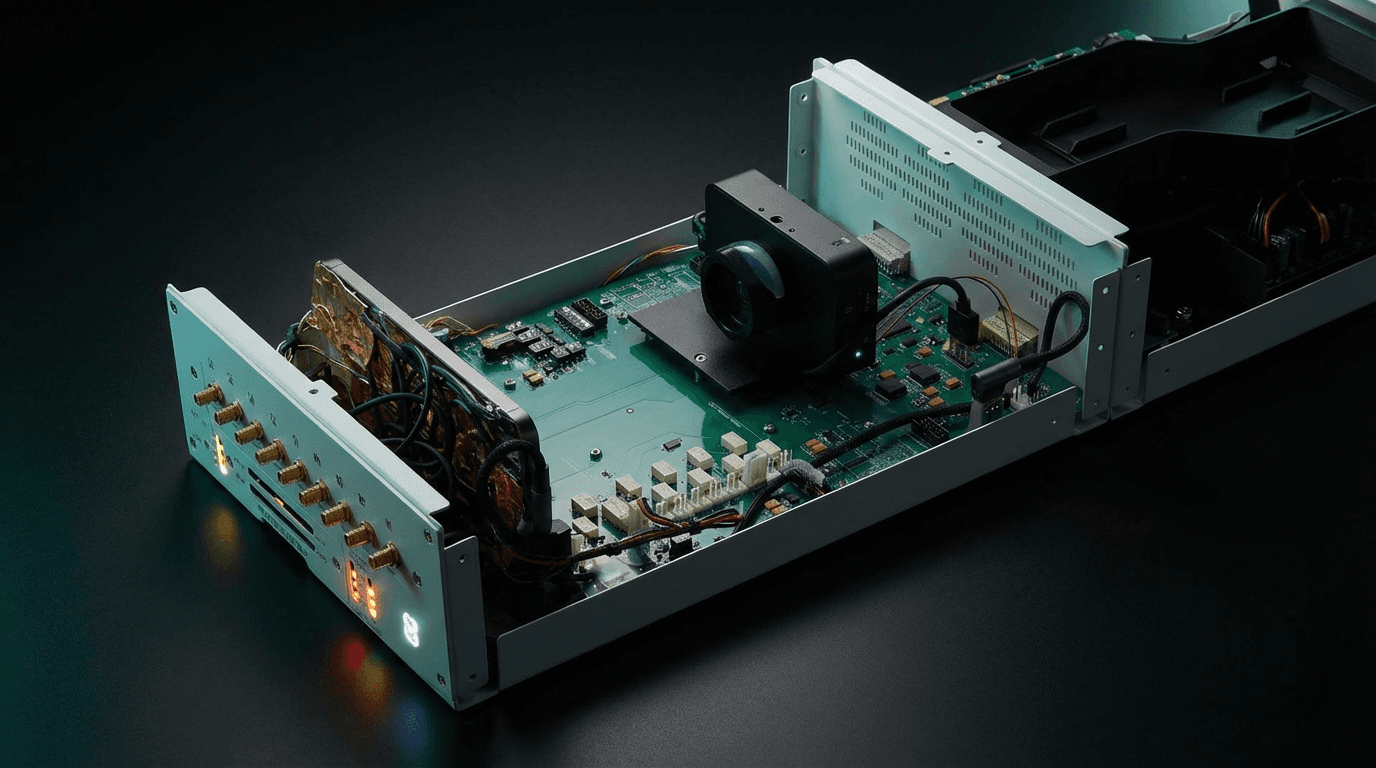
The carrier-grade, four-phone ME unit
4 real phones (iOS and Android) embedded in 4 hardware-controlled UE modules, 16-slot SIM multiplexing, redundant power feeds and out-of-band host access. Fully automated, zero-touch.

Unmodified iPhones and Android phones
No jailbreak, no sideloaded test app, no developer mode, no USB control path. Apple carrier engineering builds block sideloading, so software-only tools cannot test them. Mosaic Edge runs them as-is.
Zero-touch: fully automated
Power cycle, button combinations, SIM swap, OS update and recovery are done by the module and triggered from the platform. Nobody on site, so tests run unattended 24/7.
Hardware-level control of every phone
Power, volume, auxiliary controls and SIM are driven by the module, not by the phone's OS, and every control is an API call. The phone cannot block, drop or time out the connection the way ADB or USB does.
16 SIM slots plus the central SIM server
A 4-slot SIM multiplexer per module. Switch subscriber plans, roaming partner SIMs and MVNO profiles at runtime; hundreds more are shared from the SIM server instead of one SIM per phone.
Built for telecom sites, not offices
Telecom-grade power with 1+1 redundant A/B feeds, full rack width, and a separate KVM LAN for out-of-band host recovery. It installs where the network is.
One unit for a wide range of scenarios
Lab bench, high-volume regression racks, field test at cell sites, edge monitoring, drive test in a vehicle, live events: the same chassis, test suites and API everywhere.
Every control is an API call
Everything a technician would do by hand on a phone, like pressing power, holding volume for a reset or swapping a SIM, is done by the module hardware and triggered from the TaaS platform.

-48 V DC telecom power with redundant feeds, designed for live RAN sites and telecom shelters: temperature extremes, humidity, vibration and shock.
Standard commercial power for labs, offices, retail locations and data centers. Same UE modules, same platform.
Adaptable hardware architecture to enable many scenarios.
A versatile unit for a wide range of scenarios
Same chassis, same platform, test suites and API from the lab bench to the cell site, the road and the stadium.
Lab test
Rack several chassis in a shielded lab; repeatable conditions, phones and SIMs booked by any team through the platform.
High-volume regression
Many units, one API: scheduling, device and SIM allocation and multi-device campaigns are API calls, so capacity grows without adding people.
Field test
Install at cell sites and telecom shelters on -48 V DC to validate new sites, bands and features with real phones before and after launch.
Edge monitoring
Real phones on the live network measure the voice, messaging, data, video and app KPIs subscribers actually experience, 24/7, and recover themselves.
Drive test
DC-powered in a vehicle: four phones and 16 local SIMs compare operators, plans and roaming profiles on the same route in one pass.
Events
Bring a chassis to a stadium, venue or disaster site to measure what attendees experience during peak load and verify fixes the same day.
Specifications
Preliminary specifications, subject to change. SIM multiplexing requires devices with a physical SIM slot.
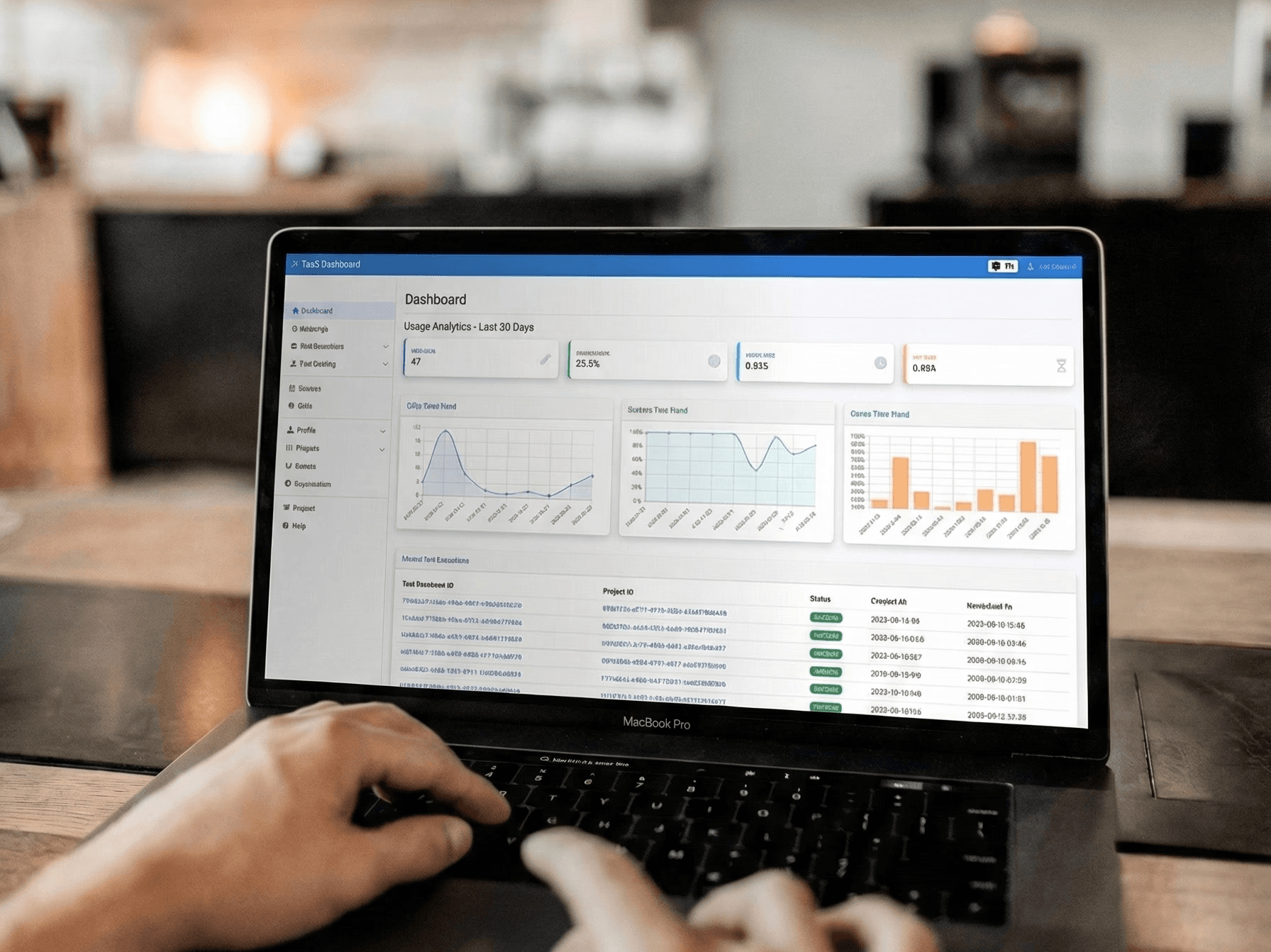
Data to improve user experience
Gather and analyze field data to enhance performance and prevent downtime.